


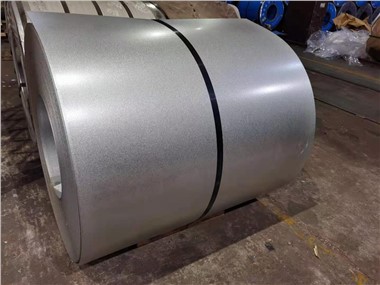
The production of steel coils is a complex multi-step process involving precise control of multiple links. The following are its main production processes:
I. Raw material preparation
1. Iron ore beneficiation
- First, iron ore is mined from the mine, but the iron content and impurities of the raw ore vary. Through beneficiation processes such as magnetic separation and flotation, the iron grade of the iron ore is improved, impurities such as gangue are removed, and iron concentrate is obtained. For example, magnetic separation uses the magnetic difference of iron ore to separate iron minerals with strong magnetism from other non-magnetic substances.
2. Coke and flux preparation
- Coke is an important reducing agent and heat source in steel production. Coking coal is made into coke through processes such as dry distillation. At the same time, fluxes such as limestone need to be prepared, which are used to lower the melting point of ore and remove impurities during the ironmaking process.
II. Ironmaking (blast furnace ironmaking)
1. Charging
- Pre-treated iron ore, coke and limestone are loaded into the blast furnace from the top in a certain proportion.
2. Smelting reaction
- In the blast furnace, the combustion of coke produces high temperatures, which can reach 1500-1600℃. Coke reacts with oxygen to produce carbon monoxide, which acts as a reducing agent to reduce the iron oxide in the iron ore into liquid iron. During the reaction, limestone decomposes into calcium oxide, which combines with impurities such as gangue in the ore to form slag.
- For example, the main reduction reaction is: \(Fe_{2}O_{3}+3CO = 2Fe + 3CO_{2}\).
3. Iron and slag tapping
- Liquid iron and slag are discharged from the iron tapping port and slag tapping port of the blast furnace respectively. The liquid iron is sent to the steelmaking process, and the slag can be used for other industrial purposes, such as the production of building materials.
III. Steelmaking
1. Converter steelmaking (taking oxygen converter as an example)
- Charging: Pour molten iron into the converter, and add other raw materials such as scrap steel to adjust the composition of the steel.
- Oxygen blowing refining: Blow high-pressure oxygen from the bottom or top of the converter, and oxygen reacts with carbon, silicon, manganese and other elements in the molten iron to remove impurities and adjust the chemical composition of the steel such as the carbon content. For example, carbon reacts with oxygen to generate carbon dioxide, which is removed, and the reaction formula is \(C+O_{2}=CO_{2}\).
- Alloying: According to the requirements of the required steel grade, various alloy elements such as manganese, chromium, nickel, etc. are added in the later stage of steelmaking to obtain molten steel with specific properties.
- Steelmaking: After refining, the molten steel is poured into the ladle.
2. Electric furnace steelmaking (applicable to special steel grades)
- Charging: Load raw materials such as scrap steel and pig iron into the electric furnace.
- Electric smelting: Input electrical energy into the furnace through electrodes to melt the raw materials. During the smelting process, an oxidation reaction is also carried out to remove impurities and alloying operations are performed, which is similar to converter steelmaking.
IV. Continuous Casting
1. Molten Steel Injected into the Crystallizer
- The molten steel obtained from steelmaking is injected into the crystallizer of the continuous casting machine. The crystallizer is a water-cooled copper mold. The molten steel begins to solidify in the crystallizer to form a shell of a certain thickness.
2. Billet Drawing and Cooling
- With the vibration of the crystallizer, the billet with the shell is continuously pulled out of the crystallizer. At the same time, it passes through the secondary cooling zone and is further cooled by water spraying and other methods to make it completely solidified.
3. Cutting
- According to the required length, the continuously cast billet is cut to obtain a fixed length of billet.
V. Rolling (making billets into coils)
1. Heating
- The cut billet is sent to the heating furnace for heating to a suitable rolling temperature, generally 1000-1200℃.
2. Rough rolling
- The heated steel billet first enters the rough rolling mill for rolling. Through multiple rolling passes, the thickness of the steel billet is greatly reduced and the width is increased, and the steel billet is rolled into an intermediate billet.
3. Finishing rolling
- The intermediate billet enters the finishing mill for further rolling. The finishing mill can accurately control the thickness, width and surface quality of the rolling. During the finishing rolling process, the temperature of the rolled piece gradually decreases.
4. Coiling
- The steel strip after finishing rolling is rolled into a coil by a coiler to complete the production of steel coils. The coiled coils can be processed according to different needs, such as cold rolling, galvanizing, etc.