


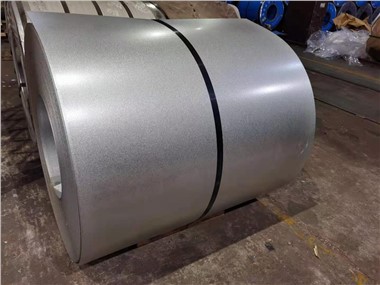
The production process of steel coils mainly includes hot rolling process and cold rolling process. The following is a comparison of the costs of these two processes:
I. Hot rolling process cost
1. Raw material cost
- The raw materials of the hot rolling process are usually continuous casting billets, and their cost is affected by the price fluctuations of raw materials such as iron ore and coke. In the ironmaking process, iron ore needs to be pre-treated by beneficiation, sintering or pelletizing. Coke is used as a reducing agent and heat source, and its quality and price have a greater impact on the cost of molten iron. Since the hot rolling process has lower requirements for the purity of raw materials than cold rolling, there is a wider range of raw material selection, and some relatively low-priced raw materials may be used, such as molten iron produced from some low-grade iron ore or scrap steel containing certain impurities.
2. Energy cost
- The hot rolling process requires the billet to be heated to a higher temperature (generally 1000-1200℃), which consumes a lot of energy, mainly fuels such as coal gas or heavy oil. Energy costs account for a large proportion of the hot rolling process costs. However, with the advancement of technology, some steel companies have adopted advanced heating furnace technology, such as regenerative heating furnace, to improve energy utilization efficiency and reduce some energy costs.
3. Equipment and maintenance costs
- Hot rolling equipment includes large equipment such as heating furnace, roughing mill, finishing mill and coiler, and the investment cost of these equipment is very high. Moreover, since the equipment is subjected to high temperature, high pressure and high load working conditions during hot rolling, the wear and failure rate of the equipment is relatively high, and regular maintenance and replacement of parts are required, which also increases the equipment maintenance cost.
4. Production efficiency and scale benefits
- The hot rolling process is suitable for large-scale production. When the output reaches a certain scale, the fixed cost of unit product can be reduced. For example, large steel companies can improve the utilization rate of hot rolling production lines through continuous production, which can share the costs of equipment investment, energy consumption, etc. to a certain extent, thereby reducing the unit cost of hot-rolled steel coils.
2. Cold rolling process cost
1. Raw material cost
- The raw material of the cold rolling process is hot-rolled coil. Since cold rolling has high quality requirements for raw materials, such as surface quality and thickness accuracy, its raw material cost is relatively high. Generally, high-quality hot-rolled coils need to be selected as raw materials for cold rolling. These hot-rolled coils may have undergone more stringent quality control and processing during the production process, and the price will increase accordingly.
2. Energy cost
- Although the cold rolling process does not require heating the steel to a very high temperature like hot rolling, a large amount of electricity is consumed in the cold rolling process to drive the rolling mill to roll the steel. In addition, annealing and other processes in the cold rolling process also require a certain amount of energy, such as gas or electricity, to improve the performance of steel. In general, the energy cost of the cold rolling process is also an important part of its cost structure.
3. Equipment and maintenance cost
- Cold rolling equipment is more sophisticated than hot rolling equipment, and requires higher precision and stability of the equipment. For example, cold rolling mills need to accurately control parameters such as rolling force, rolling speed and roll gap to ensure the quality of cold rolled coils. These precision equipment have high investment costs and are difficult to maintain. They require professional technicians and expensive repair tools and parts, so equipment and maintenance costs account for a large proportion of the cold rolling process costs.
4. Production efficiency and economies of scale
- The production efficiency of the cold rolling process is lower than that of hot rolling, because the cold rolling process requires multiple rolling passes, and intermediate processing procedures such as annealing may be required between each pass. At the same time, the cold rolling process has more stringent requirements on the production environment and operation, which also limits the production speed. Due to the low production efficiency, it is difficult to fully amortize the cost through large-scale production like the hot rolling process to a certain extent, so the unit cost of cold-rolled steel coils is relatively high.
III. Comprehensive cost comparison
1. Overall cost
- In general, when market fluctuations and special circumstances are not considered, the cost of the hot rolling process is relatively low. This is because the hot rolling process is more flexible in the selection of raw materials, although the total amount of energy utilization is large, the unit cost has advantages under large-scale production, and although the equipment investment is large, the equipment cost per unit product can be reduced through economies of scale. The cost of the cold rolling process is relatively high due to factors such as high requirements for raw material quality, precision equipment and low production efficiency.
2. Cost fluctuation factors
- Raw material price fluctuations affect the costs of both processes, but due to the reliance of cold rolling on high-quality raw materials, its raw material costs may be more significantly affected by market fluctuations. In terms of energy price fluctuations, the hot rolling process is sensitive to energy prices such as gas and heavy oil, while the cold rolling process is more concerned about electricity price fluctuations. In addition, equipment updates and technological improvements will also affect costs. For example, new hot rolling technology may further reduce energy consumption and improve production efficiency, thereby reducing hot rolling costs; and if the technological upgrade of cold rolling equipment can improve production speed and product quality, it will also help reduce cold rolling costs.