


I. Introduce
In the industrial field, hydraulic decoilers are a vital technology that provides key support for the efficient operation of production lines. Especially in metal processing, coil production and other related industries, the application of hydraulic decoilers is crucial. As a solution designed to meet specific production needs, customized hydraulic decoilers play an irreplaceable role in industrial environments that meet special requirements.
The criticality of hydraulic decoilers in industrial applications
Hydraulic decoiler is a device used to unwind and coil coiled materials, and is widely used in metal processing, building materials, papermaking and other industries. It is responsible for ensuring that the coil material enters the downstream production line smoothly, efficiently and accurately. In industrial production, the unwinding of coils is a key step in the entire production process, which has a direct impact on product quality and production efficiency.
Definition of Customized Hydraulic Uncoiler
Compared with standard hydraulic decoilers, custom hydraulic decoilers are equipment designed and manufactured according to specific production needs and environmental requirements. This type of decoiler goes beyond simply unwinding coils and is more focused on meeting customer expectations for production line flexibility, special material requirements, and a high degree of automation.
This customized design can include a variety of special features and accessories to suit the needs of different industries and applications. The flexibility of custom hydraulic decoilers makes them an ideal choice for many industrial manufacturers seeking higher productivity and better product quality.
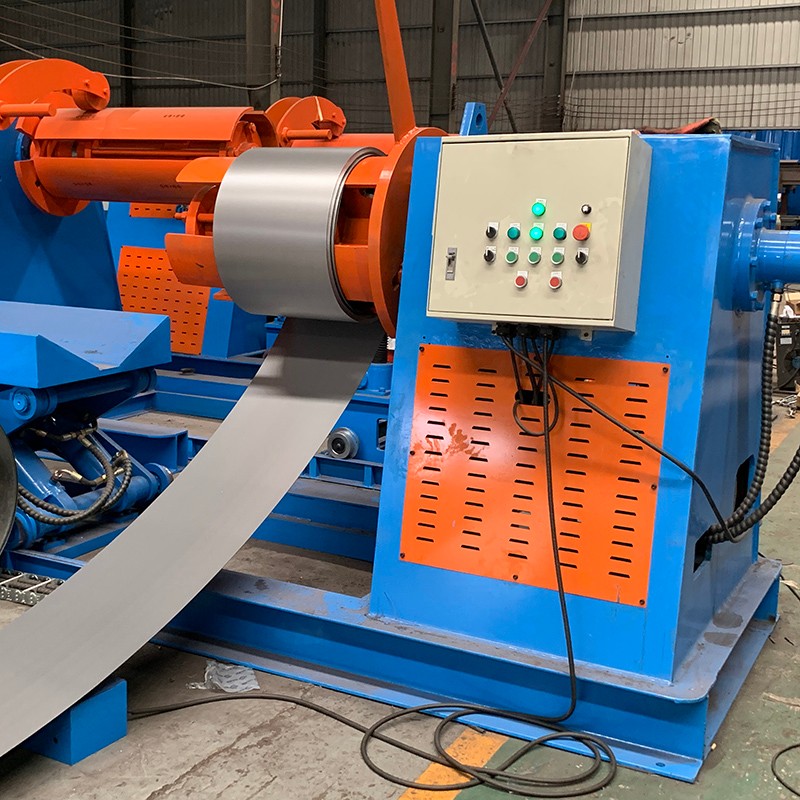
II. Standard vs. Customized: Basic Differences
A. Characteristics of Standard Hydraulic Uncoiler
Standard hydraulic decoilers typically have some common design and functional features to suit a wide range of industrial applications.
These characteristics may include:
Basic functions: The standard hydraulic decoiler is mainly designed to complete the unwinding task of coiled materials and has basic coiling and unwinding functions.
Scope of application: They are generally suitable for processing common materials such as metal coils, as well as standard sizes and weights of coils.
Universal design: Standard designs are usually designed for versatility to meet a wide range of production needs, rather than customized needs for specific industries.
Cost-Effectiveness: Due to their versatility, standard hydraulic decoilers generally have lower manufacturing costs and are suitable for situations where budgets are limited.
B. Special Design and Features of Customized Hydraulic Uncoilers
In contrast, custom hydraulic decoilers are more flexible in design and functionality to meet customers' special needs.
Here are some common features of custom designs and functionality:
Special Materials Handling: Customized hydraulic decoilers can be designed to handle special materials such as high-strength alloys, composites, etc.
Special sizes and weights: They can accommodate rolls of different sizes and weights to suit the needs of different industries and applications.
High degree of automation: Custom equipment often integrates higher levels of automation technology to increase production efficiency and reduce human intervention.
Special accessories: According to requirements, customized decoilers can be equipped with various special accessories, such as edge trimming devices, tension control systems, etc.
Industry-specific standards: Customized equipment may comply with industry-specific standards and specifications to ensure its safety and reliability in a particular environment.
Custom hydraulic decoilers are designed to integrate perfectly with specific production lines, providing greater precision and controllability to meet customers' pursuit of production flexibility and customization needs.
III. Advantages of customized hydraulic decoiler
A. Improvement of production efficiency
Customized hydraulic decoilers have significant advantages in improving production efficiency.
This is mainly due to the following features:
High degree of automation: Customized decoilers often integrate advanced automation systems to enable unmanned or less-manned operations. This highly automated feature effectively reduces human intervention in the production process and improves production efficiency.
Quick Adjustments: Customized equipment is easier to make quick and precise adjustments than standard decoilers. This allows the production line to switch between different types or specifications of coils more flexibly, reducing line changeover time and improving production line utilization.
Production data monitoring: Many customized equipment are equipped with advanced monitoring systems that can monitor production data in real-time. By analyzing this data, the production team can conduct refined management, further improve production efficiency and reduce energy consumption.
B. Material adaptability and handling of special requirements
Customized hydraulic decoilers offer greater flexibility in material adaptability and handling special requirements:
Multi-material adaptability: Due to design flexibility, custom equipment can handle multiple types of coil materials, including metal alloys, composites, and more. This makes them suitable for a wider range of industrial applications.
Special requirements processing: Some industries and applications have higher special requirements for coils, such as precise tension control, edge trimming, etc. Custom decoilers can be precisely designed for these special requirements, ensuring that the production process meets high standards of quality.
C. Flexibility and adaptability
Flexibility and adaptability are some of the key advantages of custom hydraulic decoilers:
Production line integration: Customized equipment can be customized according to the special requirements of the production line, ensuring perfect integration of the equipment with the entire production line. This high degree of adaptability allows the production line to better respond to changes in market demand.
Custom Accessories: Depending on the needs of a specific application, custom decoilers can be equipped with a variety of custom accessories to provide a more comprehensive solution. These accessories can include edge trimming devices, tension control systems, automatic cutting devices, etc.
Industry adaptability: Different industries have different requirements for coil materials. Customized equipment can be customized according to the standards and specifications of different industries to ensure the adaptability and stability of the equipment in specific industries.
These advantages of customized hydraulic decoilers make the production line more competitive, able to adapt to changing market and production needs and create greater value for the enterprise.
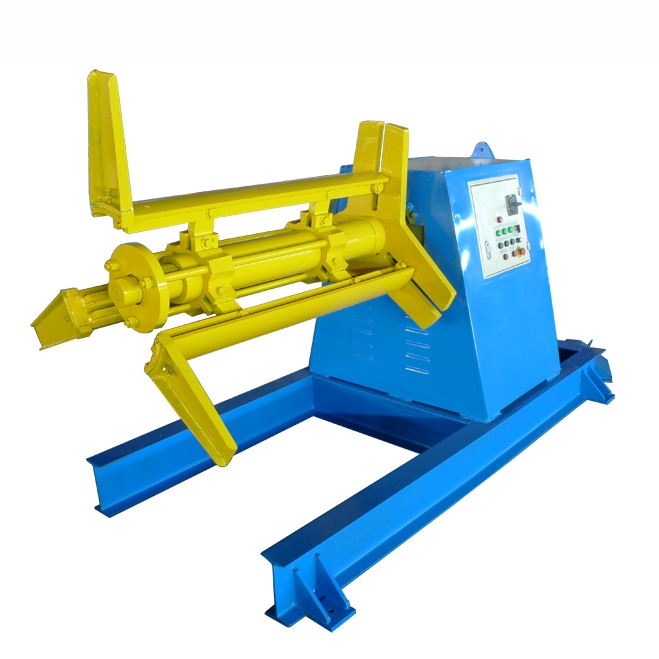
IV. Comparison of technical features
A. Automation and intelligent control systems
In the comparison of technical features, automation and intelligent control systems are some of the significant differences between standard hydraulic decoilers and customized hydraulic decoilers.
Standard hydraulic decoiler:
Standard equipment usually comes with basic automation functions such as simple take-up and unwind control. However, the functions in terms of intelligent control are relatively limited and usually only cover the automatic execution of basic operations.
Customized hydraulic decoiler:
Customized equipment is more likely to adopt advanced automation and intelligent control systems. These systems may include programmable controllers (PLCs), sensor networks, and advanced algorithms to enable higher levels of control and monitoring. Such a system makes the production process more intelligent and can adapt to different production needs and changes.
B. Production line integration and collaborative operations
Standard hydraulic decoiler:
Standard equipment typically operates more independently and less cooperatively with the rest of the overall production line. They are less flexible in terms of line integration and collaborative work and may require more manual intervention to coordinate operations.
Customized hydraulic decoiler:
Custom equipment is often designed with integration into the entire production line in mind. They can more easily work together with other equipment and systems to achieve a more efficient and coordinated production process by sharing data and information. This integration helps improve efficiency and consistency throughout the production line.
C. Quality Control and Consistency
Standard hydraulic decoiler:
Quality control of standard equipment typically focuses on basic mechanical properties and operating consistency. Due to its versatility, there may be some limitations when handling special materials or complex processes.
Customized hydraulic decoiler:
Quality control of customized equipment focuses more on meeting specific industry standards and customer requirements. This may include more precise tension control, the ability to handle specialty materials, and a higher level of process control. This helps ensure production consistency and high-quality web output.
By comparing these key technical features, we can gain a clearer understanding of the advantages of customized hydraulic decoilers in industrial applications and how they meet changing production needs.
V. Cost-Effectiveness
A. Comparison of initial investment and long-term benefits
When considering the choice of hydraulic decoiler, initial investment and long-term benefits are some of the key factors in making the decision. There are significant differences between custom hydraulic decoilers and standard equipment in this regard.
Initial investment:
The initial investment in custom hydraulic decoilers is usually relatively high as they need to be designed and manufactured to specific needs. In comparison, standard equipment has a lower initial investment due to its universal design.
Long-term benefits:
In the long term, the benefits of custom equipment often exceed its initial cost. Due to their specialized design, custom hydraulic decoilers can better meet the needs of specific industrial applications, increase production efficiency, and reduce breakdowns and maintenance costs.
Life cycle cost:
Things to consider are life cycle costs, including the equipment's useful life, maintenance costs and performance. The high performance and reliability of custom equipment often result in lower life cycle costs.
B. Economic benefits of energy saving and reduced scrap rate
Energy saving benefits:
Customized hydraulic decoilers usually adopt advanced energy-saving technologies, such as intelligent control systems and efficient hydraulic devices. These technologies help reduce energy consumption, improve energy utilization efficiency, and save operating costs for enterprises.
Reduced scrap rate:
The high degree of accuracy and controllability of custom equipment helps reduce scrap rates. By reducing errors and waste during production, companies can realize significant cost savings in materials and energy.
Environmental benefits:
The reduction in scrap rate also brings environmental benefits, reduces the waste of resources, is in line with the concept of sustainable development, and also helps improve the corporate image.
Overall, the cost-effective advantage of custom hydraulic decoilers lies in their high adaptability and application of advanced technology. Although the initial investment is higher, the benefits in long-term operation usually exceed this cost.
VI. Industrial application cases
A. Examples of successful applications of customized hydraulic decoilers
Customized hydraulic decoilers have achieved significant success in real industrial applications, here are some examples:
Aerospace industry: An aerospace manufacturer uses a customized hydraulic decoiler to handle the unwinding and processing of high-strength alloy coils to ensure the manufacturing quality of aircraft parts.
Automobile manufacturing: An automobile production plant uses a specially designed hydraulic decoiler capable of handling different types and sizes of metal coils to accommodate diverse auto parts production needs.
Energy Industry: In the energy sector, some hydraulic decoilers are designed to unwind large rolls, such as in the production of solar panels and wind turbine blades.
B. Limitations and Challenges of Standard Uncoilers
While standard hydraulic decoilers perform well in some scenarios, there are some limitations and challenges:
Material adaptability:
Standard equipment may encounter limitations in handling certain specialty materials, while custom equipment can be adjusted to meet different material requirements.
Production flexibility:
Standard equipment may not be flexible enough to handle diverse and rapidly changing production needs, while customized equipment can better adapt to these changes.
Precision and automation level:
For industries that require higher precision and automation levels, standard equipment may not be able to meet the requirements, and customized equipment is often equipped with advanced control systems.
VII. Conclusion
A. The impact of customized hydraulic decoilers on industrial production
Customized hydraulic decoilers play a key role in industrial production, and their impact is reflected in:
Improved production efficiency:
Customized equipment improves the overall efficiency of the production line through a higher level of automation and adaptability.
Meet special needs:
Customized decoilers can meet the individual needs of various industries for special materials, sizes and functions.
Reduce human intervention: Highly automated, customized equipment reduces the need for human operation and reduces the risk of human error in production.
B. Key factors in manufacturers' decision-making
When manufacturers select a hydraulic decoiler, key factors include:
Production needs:
The needs of the production line determine whether to choose standard or custom equipment.
Material Requirements:
If handling special materials is involved, custom equipment may be more appropriate.
Budget and investment:
Budget constraints may influence choice, but the long-term benefits of custom equipment may outweigh standard equipment.
In summary, customized hydraulic decoilers play a key role in coping with the diverse and special needs of industrial production, and manufacturers need to consider multiple factors when selecting to meet the specific requirements of their production lines.